
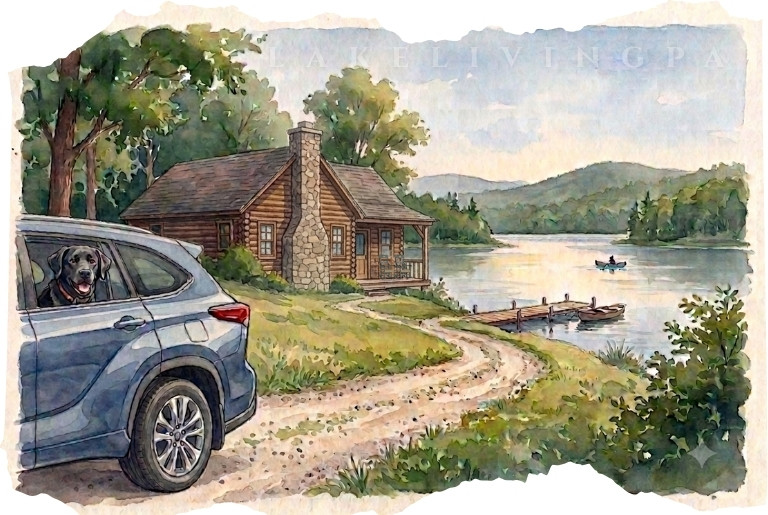
The best part of owning a lake house in the Pocono Mountains is the part where you pull in, drop your bags, and head straight down to the water. Everything’s working, no major projects waiting for you, and the work stress you left behind is already shrinking in the rearview. That is the whole point of owning a vacation home, and it is completely doable from two or three hours away. Owning a lake house from a distance just takes a little planning up front so you can lock the door, drive back home, and know everything’s under control until the next time you come to the lake.
Many of the second-home owners at Lake Wallenpaupack, Hawley, Lackawaxen and other areas actually live in New York, New Jersey, Philadelphia or Bucks County, or even further away near Washington DC. They have figured out that the distance is not the hard part. The drive is easy (your results may vary). The trick is the days in between visits. Those turn out to be the easy part, once you have a few simple systems doing the watching for you.
Build your local connections first
The golden rule of owning a lake house from a distance? Line up local help before you actually need it. Having at least one trusted person who can get to the property quickly changes everything. Whether it’s a neighbor you trade favors with, a paid handyman, or a full property manager, you need someone on call. This is especially true if you rent the property out: having boots on the ground to handle sudden issues is non-negotiable.
This matters immensely in the Poconos. If you’re more than thirty or even sixty minutes away, these local contacts become your eyes and ears.
Fortunately, if you are in a robust community like The Hideout, Hemlock Farms, Arrowhead Lake or Wallenpaupack Lake Estates (WLE), the POA office is a fantastic resource that often maintains a list of vetted local tradespeople. Use them. Ask around, collect the numbers of a plumber, an electrician, and a handyman you can trust, and save them in your phone. Gathering your squad when everything is calm is a lot easier than trying to do it at ten o’clock on a freezing Friday night in February.
Let Tech Keep a Handle on Things
Fortunately, modern technology makes it incredibly easy to keep an eye on things when nobody is there, and it’s become both affordable and highly reliable. A few things definitely earn their keep every single month: a smart thermostat you can check and adjust from your phone, a couple of water leak sensors near the water heater and under the sinks, and a low-temperature alert that pings you before anything gets close to freezing. Add a camera or two and a smart lock so you can let a contractor in from your kitchen table back home, and you have covered most of what would otherwise keep you up at night.
A quick and easy one is to set up text alerts from PPL or Met-Ed (or whoever your electric provider is). That way, you’ll know the moment there’s a power outage, rather than finding out days later.
None of these are a big investment, and they all buy the same thing: Peace of mind. You find out about a problem before it becomes a more expensive disaster. That is the entire game with a home you love from a distance.
Simple Routines, Big Impact
Houses are kind of like people. They stay healthier and happier when they get regular attention. A home that gets lived in and looked after on a regular basis will always fare better than one left entirely alone for months at a time. Every time you visit your lake house, you are doing as much good for the house as you are for yourself!
For the stretches when you aren’t there, having your local contact do a quick walkthrough every so often is a great idea. You might also want to consider scheduling a regular house cleaning. Just letting some fresh air in and having someone dust and vacuum occasionally works wonders for keeping a closed-up house feeling alive.
Pair those check-ins with a simple seasonal rhythm for home maintenance:
- Spring: Check the gutters, inspect the roof for loose shingles, and test the sump pump.
- Fall: Clean out the gutters, service the HVAC, and prep the heating system.
- Winter: Check the heat tape on your pipes and line up a plowing service for the season.
Winterizing your lake house is especially critical if you plan to leave the house empty during the coldest months. When you’re properly prepared, a Poconos cold snap remains just a weather report you read about from the comfort of your couch, not a frantic midnight call to a plumber and a massive repair bill.
See Also: Selling Your Lake House in the Winter
Budget for a Rainy Day
As for the budget when owning a lake house from a distance, try to set aside about one percent of the home’s value each year for maintenance and upkeep. In the years you spend less, tuck that extra cash away. When a surprise repair inevitably pops up, it’ll just be a line item to manage instead of a total crisis. Bonus: if you end up not needing the money you’ve save for repairs, you’ll have a nice cache for improvements or updating down the road.
Keep Up Appearances
A house that looks empty can be an open invitation to attention you don’t want. Keep your vacation home looking lived-in, even during the quiet stretches. Use a light on a timer inside, have a neighbor park a car in the driveway now and then, and make sure mail or packages don’t pile up on the porch.
If you don’t have time to do it yourself, hire someone to manage your yard and lawn by cutting the grass, trimming the weeds, and raking leaves (we have sooooo many leaves here in the woods of Northeastern PA!)
A house that looks occupied and cared for is a lot less interesting to anyone wandering by.
Cover it the right way
“I love paying homeowner insurance premiums!” said nobody ever. We all hate it, don’t we? That said, it’s truly a necessity and a lifesaver if something goes wrong.
You must be upfront with your agent about the fact that the house is often unoccupied, or if you plan to rent it out short-term (Airbnb, VRBO, etc). Standard homeowner insurance policies usually have a “vacancy clause” that gives them an out when it comes to paying for repairs. So if a pipe bursts and the house has been empty for more than 30 or 60 consecutive days, they can flat-out refuse to pay for the damage. Similarly, if a renter gets hurt on the property and you only have a traditional policy, you could be on the hook for the medical bills. Make sure your insurance agent knows how the home is used and obtain the appropriate insurance.
Out of Sight, Peace of Mind
Set all of this up once, and the worry about what’s happening back at the lake completely disappears. The owners who get this right stop stressing about the house when they’re back home. That frees you up to do the exact thing you bought it for. You picked out a place at the lake to relax, not to inherit a second set of chores when you’d rather catch a walleye or take the boat out to Epply and chill.
By taking the time to gather your squad, automate your tech, and lock down your maintenance rhythm now, you’re protecting your investment and your sanity. When Friday afternoon finally rolls around, your only job should be unpacking the cooler, throwing some wood on the fire, and enjoying the view.
Common Questions
How often should I check on a lake house I don’t live at?
There’s no magic number, but the houses that stay out of trouble get looked in on regularly, especially through winter and after a big storm. A neighbor or caretaker walking through every week or two catches the small stuff early, and remote sensors quietly cover the days in between.
Do I need a property manager if I’m not renting the house out?
Usually not. If you’re not renting, a trusted neighbor or a paid caretaker doing periodic check-ins is plenty. A full property manager starts to make sense once you’re renting and juggling guests, cleanings, and turnovers from a few hours away.
What’s the smartest first thing to set up in a lake house I’ll own from a distance?
A smart thermostat plus a couple of water leak sensors and a low-temperature alert. It’s a small, inexpensive kit, and it covers the most common and most expensive thing that goes wrong in an empty house, which is water where you don’t want it.
Own a Lake House & Ready to Sell?
Wish You Had One and Want to Buy?
I work with a lot of owners who live hours from their place at the lake, and I know the local people who keep those houses running. Whether you already own a lake house in the Poconos or you’re weighing it and want a straight answer about what owning a lake house from a distance entails, I’m happy to talk it through.
Message KarenOwn the View. Love the Life.
ABOUT THE AUTHOR

Karen Rice
Karen Rice of Keller Williams Real Estate has been a full-time Realtor since 2007. She specializes in luxury, lakefront, waterfront, and vacation home sales in the Lake Wallenpaupack, Lake Ariel, and the greater Pocono Mountains region of Northeastern Pennsylvania. Thinking about a specific property or community, or just want to talk it through? Message me.
Own the View. Love the Life.


Leave a Reply