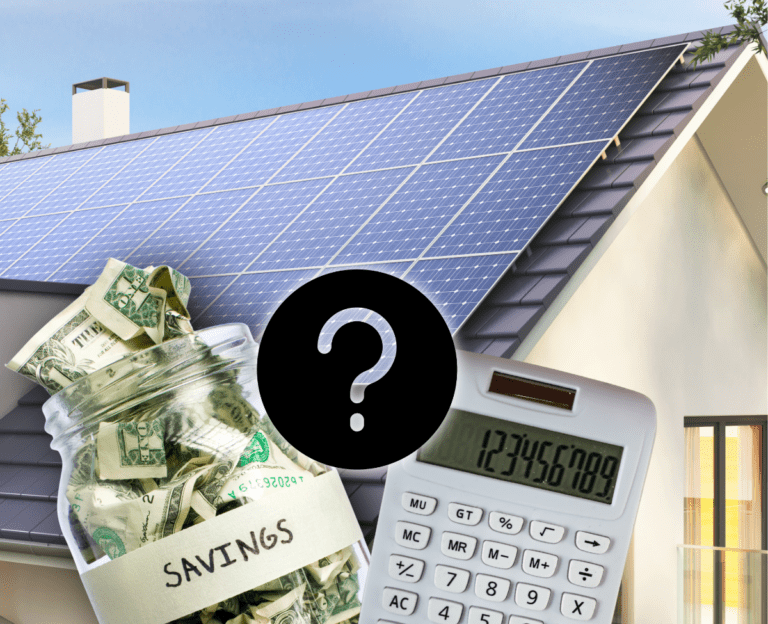
Do Solar Panels Save Money in the Poconos?
What Homeowners Sometimes Miss
For many homeowners, electric costs are one of the bigger monthly expenses…and I’ve never heard a homeowner say they loved getting their bill. Around the Poconos and Lake Wallenpaupack, many homes are vacation and second homes, but whether you live here full-time or you’re here on weekends, nobody wants to throw money out the window. Add in the things like bigger homes with cathedral ceilings, electric heat or heat pumps, all the gadgets and tech toys…and the utility costs can climb fast.
So it makes sense that solar panels get attention here. If you could “lock in” lower electric costs, why wouldn’t you?
The reality is that solar can save money, but it doesn’t always. And in our local market, it’s wise to consider a few practical details that don’t fit neatly into the sales pitch you get from the solar rep.
This post, part 1 of 2, is about the money question only: does solar actually save you money in the Poconos/Lake Wallenpaupack region? (In Part 2, I talk about home resale and the “solar adds value” sales pitch.)
The simple math behind solar savings
Solar savings aren’t magic. They’re math.
Solar saves money when the value of the electricity you don’t have to buy (plus any credits or incentives you receive) is greater than the all-in cost of the system over time.
That sounds obvious, but it’s important because it forces the right follow-up questions:
- How much electricity will the system realistically produce on this property?
- What is that electricity worth under your utility’s billing structure?
- What are you paying for the system—cash, loan, lease, or PPA?
- What additional costs might show up later?
In the Poconos, those first two questions—production and value—are where people can miscalculate.
Tree cover: the Poconos reality check
If you live in Hawley, Lake Ariel, Greentown, Gouldsboro, Tafton, Paupack, Lackawaxen, Newfoundland, Dingmans Ferry, Milford…heck, anywhere in Pike, Wayne, or Monroe Counties, you already know this: we have trees. A lot of them. Mature trees like ours create a thick canopy overhead, and many homes are on wooded lots that aren’t wide-open to the sunshine.
This matters because solar production is driven by sun exposure. If your roof gets partial shade for a significant part of the day, your output drops. And when output drops, so does that “payback.”
Some homeowners may trim trees back to support optimum solar performance. Others bought their property specifically for the woods and privacy, and they don’t want to change that. You need to understand that solar savings depend on sun exposure, and in our region, it’s not guaranteed.
Seasonal use changes the math (especially around Lake Wallenpaupack)
A big share of homes around Lake Wallenpaupack and the Northern Poconos are vacation homes or second homes. That lifestyle is one of the best parts of living here, but it can create solar outcomes that look different from what people expect.
Here’s why:
- If you’re not using the home consistently, you may not be offsetting electricity at the times you assume.
- You might export a lot of power back to the grid when the house is empty.
- The value of exported power is not always the same as the value of power you use directly.
For some owners, a second home still has enough baseline usage (dehumidifiers, well pumps, security systems, HVAC, EV charging, electronics, etc.) that solar offsets meaningful costs. For others, the house is quiet most of the week, and the savings may take longer to materialize.
This is one reason I don’t love “generic payback” numbers you may see online or hear from a solar sales rep. They may very well not be accounting for the way people actually use their properties.
Net metering: helpful, but misunderstood
Pennsylvania net metering can be a major factor in savings, but homeowners often misunderstand it.
Most people hear “net metering” and imagine the utility cutting them a check for extra power. In many cases, what you’re really receiving is a credit against your bill. That’s still valuable, of course, but it’s not the same thing as guaranteed profit, and the details can vary by utility and billing setup.
If you’re considering solar, you want to understand how credits are calculated and what happens if you consistently generate more than you use. If your home is seasonal, this matters even more, because you may be exporting more often.
The contract matters more than the panels
Two homes can install the same number of panels and have totally different financial outcomes because the contract structure may be different.
1) Paying cash (usually the clearest path)
A cash purchase is often the simplest financial story. You own the system. You keep the upside. There’s no third-party payment structure eating into savings.
2) Financing with a loan (watch fees and terms)
A solar loan can still produce savings, but pay attention to:
- total financed cost (including dealer fees, if applicable)
- interest rate and term length
- whether payments rise or stay fixed
- whether you can pay it off early without penalty
Some homeowners save money immediately with a good loan structure. Others end up with a payment that’s close to (or higher than) their former electric bill, especially if production is lower due to shade.
3) Leasing or PPAs (often the smallest savings)
Leases and PPAs are commonly pitched as “no money down” solutions. They can reduce bills, but they often reduce the ownership benefit because the solar company keeps a significant portion of the financial upside.
And even if savings exist, they may be smaller than people expect, especially if payments escalate annually.
If the goal is long-term savings, the contract deserves as much attention as the equipment. It might be well worth the time and money spent to have your own attorney look over the contract before you commit to anything.
Finally, do not forget to subtract the total cost of installation from the projected savings you are expecting. It may take several years to be “in the clear” and generating (no pun intended) a true savings or profit.
Solar isn’t high maintenance… but it isn’t maintenance-free
Solar systems aren’t like a boiler that needs annual service, but there are still long-term cost realities.
Things homeowners should plan for:
- Inverter replacement at some point in the system’s life
- Monitoring or service fees charged by the provider depending on installer/contract
- Roof logistics (affect on roof life; removal and reinstallation if you replace the roof later; insurance considerations)
- Battery systems often added for backup power (helpful, but certainly not cheap)
The panels themselves may last a long time, but financial calculations should include the pieces that don’t.
A practical way to estimate whether solar will save you money
- Get a realistic production estimate that accounts for shade (not just roof size).
- Compare your annual kWh usage to expected annual production.
- Ask for an “all-in” cost summary, including loan fees if financing.
- Ask what happens financially if production is lower than projected.
- Factor in future costs: inverter, roof work, battery replacement if applicable.
If a solar proposal can’t explain those items clearly, that’s not a great sign.
So… does solar save money here?
Sometimes, yes. When a property has strong sun exposure, the system is sized appropriately to usage, and the contract is straightforward, solar can absolutely reduce long-term electric costs in the Poconos.
But solar doesn’t automatically save money just because it was installed. In our region, the biggest reasons savings disappoint tend to be:
- heavy tree cover, longer than normal periods of rain/overcast skies, and typical seasonal shade
- seasonal occupancy and lower-than-expected self-consumption
- financing structures that absorb the upside
- long-term costs that weren’t included in the original “savings” story
If you’re considering solar, the best move is to treat it like any other major home system decision: measure the real conditions, read the contract seriously, consider obtaining legal advice, and assume the truth is somewhere between the best-case estimate and the worst-case fear.
Read Next: (Part 2): Solar panels and resale in the Poconos: why an increase in your home’s value isn’t guaranteed, what buyers worry about, and how to avoid roadblocks if you already have solar.
Arrowhead Lake Community in Pocono Lake, PA is one of the region’s top lake house communities. Click here to see a list of Arrowhead Lake homes for sale.
Thinking about selling a home in Northeastern Pennsylvania around Lake Wallenpaupack, Lake Ariel, Hawley, Lackawaxen, Gouldsboro, Pocono Lake and other parts of the Northern Poconos? I’m Karen Rice, a full-time Realtor since 2007. I help sellers price strategically, understand current local demand, and navigate the details from prep to closing. If you’d like a realistic market valuation and a clear home selling plan, reach out and we’ll set up a consultation.

Cell: 570-647-5170
Office: 570-226-0500
karen.rice@kw.com
Keller Williams Real Estate
